For decades, cancer diagnostics have lagged behind the pace of the disease. By the time a detection tool reaches clinical deployment, the window for intervention in too many patients has already narrowed. The breakthrough tools now rewriting that story are not being built by incremental improvement; they are being built by leaders who start from an entirely different premise.
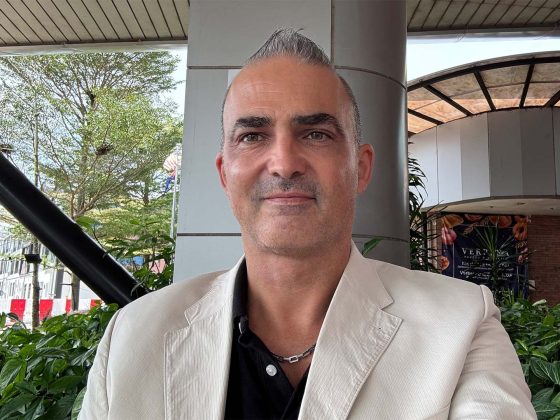
Frederic Scheer, CEO, CSO, and co-founder of ALERCELL, an AI-powered molecular diagnostic company focused on transforming cancer detection through precision oncology, brings over 30 years of experience in founding and scaling category-defining companies across healthcare, materials science, and energy. “Innovation without execution is just a concept,” Scheer states. “Execution is what turns science into impact.”
Start With the Patient, Not the Technology
The most consistent failure pattern in diagnostic development is the reverse sequence: technology gets built, then a clinical application is found for it. The result is a solution optimized for what the technology can do rather than what the patient actually needs. At ALERCELL, the question that drove development was not what the technology enabled, but where current diagnostics were failing patients.
Leukemia and non-small cell lung cancer emerged as the focus – precisely because late detection in both is too often fatal. When innovation is anchored to that specific, undeniable clinical gap, every subsequent decision – research design, product architecture, regulatory strategy, and commercial pathway – gains clarity and urgency it would not otherwise have. The patient outcome is not the destination. It is the constraint that shapes every decision along the way.
Breakthrough Happens Where Disciplines Meet
Precision oncology demands two things simultaneously: deep molecular biology and advanced computation. Neither is sufficient on its own. Traditional tools and the human eye miss patterns that become visible only when molecular science and AI are operating in genuine integration rather than in parallel.
Scheer’s advanced studies at Harvard Medical School in genetics and precision oncology and at MIT in AI for healthcare reinforced a principle that shapes how ALERCELL builds its teams: the most significant advances emerge at the intersection of disciplines, not within any single one. Building teams that bridge biology, data science, and clinical expertise is not an organizational preference. It is the structural condition that makes a breakthrough possible. AI is only as powerful as the science and data behind it, meaning the quality of the molecular science sets the ceiling for what the AI can detect.
Execute Like a Builder
Ideas do not save lives. Execution does. Across a career that spans pioneering bioplastics at Cereplast to building ALERCELL, Scheer has followed the same pattern in every venture: raise capital, secure intellectual property, build infrastructure, and move with urgency. In diagnostics specifically, that urgency has a precise shape: rigorous validation, regulatory discipline, and global scalability designed from day one, rather than retrofitted at the point of commercialization.
The leaders building the future of oncology diagnostics will be defined not by the ambition of their scientific vision, but by their willingness to execute against it with the same rigor they apply to the science itself. Faster detection, more accurate diagnosis, and earlier intervention are achievable outcomes. They require builders willing to close the gap between concept and clinical impact without sacrificing either the scientific integrity or the commercial discipline that makes deployment at scale possible.
Follow Frederic Scheer on LinkedIn for more insights on precision oncology, AI-powered diagnostics, and building biotech ventures that deliver measurable impact in cancer care.