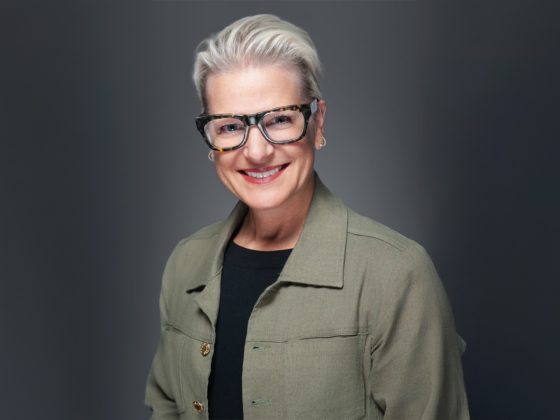
Thirty years ago, breast cancer and ovarian cancer had identical survival rates. Both sat at 50%. Today, breast cancer survival has climbed to approximately 95%. Ovarian cancer remains at 50%. That divergence is a funding decision made over three decades and measured in lives. Emily Campbell, founder of Not These Ovaries, did not arrive at this work through research or policy. She arrived through a six-week diagnosis during which physicians, nurses, and specialists kept repeating the same phrase, how rare her tumor was, how unusual, and how little understood. She drew the logical conclusion. If no one understands it, no one is funding it. If no one is funding it, no one is building treatments for it. She was right on all counts. “Money is such a key to actually finding treatments,” Campbell says. “It goes back to the funding.”
A Chronic Disease Treated With Drugs Built for Someone Else
The survival rate comparison is the most legible measure of what underfunding produces. It is not the most human one. Low-grade serous ovarian cancer is not an acute disease that resolves after treatment. It recurs. It persists. Women are never truly cured of it. They manage it, indefinitely, with whatever happens to be available. Currently, that means chemotherapy that does not work and off-label treatments borrowed from breast cancer and skin cancer research because nothing purpose-built exists. “There’s no FDA-approved treatment for a first-line treatment for low-grade serous ovarian cancer,” Campbell says. Only one approval exists for recurrence cases, granted for the first time last year. This is not a regulatory failure. It is the predictable output of a research pipeline that was never adequately funded to begin with. The women living with this disease are not waiting for a breakthrough. They are waiting for the investment that would make a breakthrough possible.
Speed Is Not a Luxury
What the funding equation requires is volume and speed, simultaneously, without trading one for the other. Volume because cancer research is expensive by nature. Lab infrastructure, researchers, tumor samples, clinical trials, the costs pile quickly into millions of dollars per project, and there is no methodology that circumvents that reality. Speed because cancer operates on its own timeline and waits for nothing. “Cancer doesn’t wait,” Campbell says, “so we can’t either.”
That urgency has sharpened considerably as government research funding faces cuts. The gap that philanthropic and private capital is being asked to fill is growing, and the window to fill it before momentum stalls is narrowing. The rare ovarian cancer research community is, paradoxically, well-positioned to absorb that capital effectively. It is a tight-knit group, and that constraint has produced unusually focused collaboration. The 2026 Low Grade Serous Ovarian Cancer Consensus Conference, bringing together researchers, physicians, and patient advocates to produce a new white paper, is a direct expression of what that collaboration can generate when funding supports it.
AI and the Drug Combination Problem
There is a theory circulating among researchers that the drugs capable of treating rare cancers may already exist. The challenge is identifying which combinations work across a solution space that is effectively infinite. This is where AI enters, not as a replacement for the longitudinal work that clinical research demands, but as a tool for compressing the early laboratory phase. Working through tumor samples and lab-grown tissue to identify viable drug combinations faster than human analysis can manage is exactly the kind of high-volume, pattern-dependent problem AI is built for. “AI and speed go really hand in hand,” Campbell says, particularly in reaching a working theory before committing to the longer arc of validation.
The combination of targeted funding, accelerating research collaboration, and AI-assisted early-stage discovery creates an opening. Whether it produces a first-line treatment, ends the practice of prescribing chemotherapy that does not work for this disease, and meaningfully improves quality of life for the women living with it depends on decisions being made about funding right now. The survival rate gap between breast cancer and ovarian cancer was not inevitable. It was implicitly chosen through decades of funding allocation. The next 30 years can look different. The question is whether the urgency arrives before more time runs out.
Learn more at Not These Ovaries and follow Emily Campbell on LinkedIn for more on rare ovarian cancer research, funding advocacy, and patient resources.