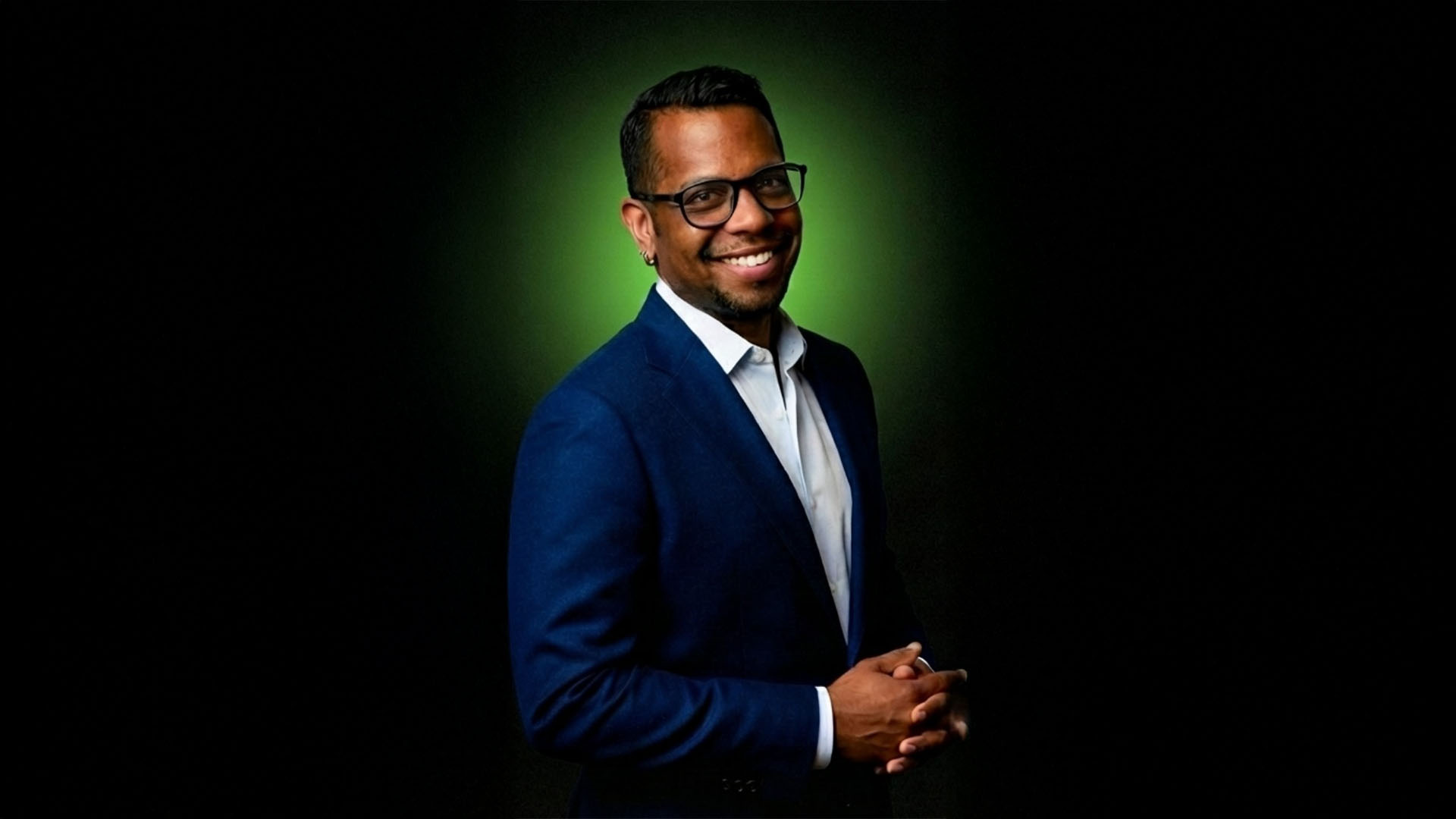
When growth becomes painful, the instinct is to rewrite the strategy. Restructure the organization, add headcount, and move faster. Most leadership teams have run that play at least once, and most of them discover the same thing on the other side. The strategy was never the problem to begin with. Richard A. Hinton, a senior people and leadership executive with over 20 years of experience working directly with CEOs, founders, and executive teams across construction and high-growth technology environments, has a clear point of view on what actually breaks when scaling organizations begin to struggle. “The strategy usually is not the issue,” Hinton says. “What breaks is how leaders show up to execute it.” Most organizations don’t have a strategy problem. They have a leadership capability gap. The gap between strategy and the leadership required to deliver it is where growth stalls, talent exits, and execution quietly collapses. Closing that gap is the work most organizations delay until the cost of delay becomes impossible to ignore.
When Roles Are Unclear, Everything Slows
The first pattern Hinton identifies is one that masquerades as a capability problem but is actually a structural one. When accountability is unclear, decision-making slows, not because people lack the ability to decide but because nobody is certain they actually own the outcome. The reflexive response is to add structure: more process, more hierarchy, and more documentation. Hinton is direct about why that does not work. “The real work is defining ownership with precision,” he says. Who decides. Who contributes. What accountability actually means. “This clarity is not cultural,” he says. “It is operational. And it determines how fast your business can move.” Organizations that treat accountability as a values conversation rather than a structural discipline will keep having the same conversation indefinitely, while execution suffers the consequences.
Hinton has seen the impact of getting this right. In scaling organizations, clearer ownership and decision accountability have led to retention improvements of 20% and offer acceptance increases of 15%.
Alignment Is Not Agreement
The second failure pattern is subtler and more damaging, because it is invisible at the level where it originates. Leadership teams align on goals, agree on the strategy, and leave the room with what feels like shared direction. In such situations, execution fractures anyway, because alignment on goals is not the same as alignment on how those goals get delivered. “Different standards, different definitions of success, different thresholds for performance,” Hinton says. “Leaders assume everybody is aligned when they are not.” And by the time it shows up in execution, the damage is already done.
The misalignment does not stay contained at the top. It cascades into every function, every team, and every decision made below the leadership layer. Over time, it destroys trust, slows execution, and pushes the strongest people out of the organization because high performers have no tolerance for environments where the rules of success are inconsistently defined. “Alignment is not agreement,” Hinton says. “It is shared clarity on expectations, on behaviors, on what execution actually looks like. Without it, strategy does not stand a chance.”
People Strategy Is Core Infrastructure, Not Support
The third pattern separates the organizations that scale with control from those that scale into chaos. “The companies that scale well build leadership capability before it’s needed,” Hinton says. “They design systems that hold under pressure. They use data to make workforce decisions with the same rigor they apply to financial decisions.” The alternative is predictable.
When people infrastructure is assembled reactively, every phase of growth introduces new instability into the business. Leadership gaps appear without warning. Decision-making slows at precisely the moments when speed matters most. The organization feels the strain long before leadership is willing to admit it. “Most teams feel that long before leaders are willing to admit it,” Hinton says. The cost of that delay is not just operational. It is cultural. Every month a leadership team avoids this work is a month their strongest people start looking elsewhere.
Build the Infrastructure Before the Break
The shift is simple, but most leadership teams avoid it. The company is not outgrowing its strategy. It is outgrowing the leadership infrastructure required to execute it. That distinction changes where leaders invest, what they prioritize, and how quickly the business can move. “Fix the clarity. Align the teams. Build systems that hold under pressure,” Hinton says. “When leadership infrastructure is strong, execution accelerates. And when execution accelerates, everything else follows.”
Follow Richard A. Hinton on LinkedIn or visit his website for more insights on leadership systems, people strategy, and scaling organizations.