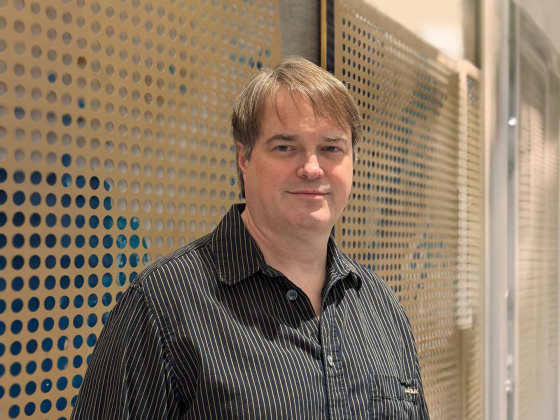
The most expensive problem in an owner-led business is rarely a lack of ideas. It is the inability to kill most of them. Founders accumulate initiatives the way attics accumulate boxes, and the result is a calendar stuffed with half-finished campaigns, unlaunched offers, and strategic work that never quite reaches the top of the pile. Jessica Roubitchek, a fractional chief marketing officer and growth strategist who works with owner-led businesses, argues that the usual remedy makes things worse. Another plan is another document. What a stalled business needs is a forced decision, made quickly, with something built on the other side of it. Her format for that is the six-hour sprint: a single focused day aimed at whatever is both urgent and consequential, ending with work that can ship. “If you’re overwhelmed, you don’t need another plan. You need a sprint,” she says, and the distinction is sharper than it sounds, because planning defers commitment while a sprint demands it inside a fixed window.
The Advice Problem Nobody Names
Roubitchek opens with an observation most owners will recognize but few articulate: the noise around a business is not neutral. “You’ve got ideas, you’ve got deadlines, and you’ve got a dozen different voices telling you what matters most, but none of them are living inside your business,” she says. Every one of those voices is reasoning from partial information. The peer who swears by a channel is describing a different cost structure. The consultant with a framework is describing a different stage. The advice is not wrong so much as unanchored, and a founder absorbing all of it ends up with a priority list assembled from other people’s contexts.
That is what makes the overwhelm so durable. A list built from external input has no internal logic for ranking it, so everything on it looks defensible and nothing looks decisive. The owner keeps adding and never subtracts, because subtraction requires a judgment nobody outside the business is positioned to make. Roubitchek’s first move in a sprint is therefore not generative but destructive. “We’re going to start by identifying what’s really driving results and what’s just draining your time,” she says. “Whether your list is 10 items long or a hundred, I help you get ruthless about where to focus.” The word ruthless is doing the real work there. Cutting is uncomfortable precisely because each item arrived with a reason attached, and the sprint’s value is in supplying the pressure to cut anyway.
Six Hours Is A Constraint, Not A Convenience
The length matters more than it appears. A six-hour window cannot accommodate exploration, and that is the point. Open-ended strategy sessions tend to expand into discussion because there is no mechanism forcing a conclusion, which is how businesses end up with a quarter of deliberation and no shipped work. Compress the container and the conversation has to resolve. Roubitchek describes clients arriving in exactly the state the format is designed to break: “Clients often walk in feeling pulled in all directions and they walk out with one clear priority and a plan to get it done.”
One priority, not five. That is the hard output, and it is the part most owners resist, because narrowing feels like abandoning opportunity. The arithmetic says otherwise. Roubitchek’s claim is that concentration beats coverage by a wide margin. “A focused sprint can create more momentum in one day than a full month of multitasking,” she says. Divided attention does not simply slow each initiative proportionally. It degrades all of them, because the switching cost compounds and nothing ever reaches the threshold where results become visible enough to justify continuing. A single priority carried to completion produces evidence. Five priorities carried partway produce an argument about whether any of them are working.
Leave With Assets, Not Homework
The second half of the day is build time, and this is where Roubitchek’s format departs most sharply from how strategic engagements usually end. The conventional deliverable is a recommendation: a deck, a roadmap, a set of next steps the client is expected to execute alone, after the energy of the session has dissipated. She rejects that model outright. “This isn’t theory,” she says. “In six hours, we might refine your offer, we might map a client journey, we might script a promo campaign, or we might draft content that you can publish. And you will leave with assets that you can use immediately. Not homework, not handouts.”
Those four options reveal what the sprint treats as the bottleneck. Refining an offer, mapping a client journey, scripting a campaign, drafting content: each is a piece of work an owner knows is needed and keeps postponing, not from ignorance but from the absence of a protected block of time with a decision-maker in the room. The sprint supplies both. It also builds in a check against generic output. “A sprint is not just about speed; it’s about alignment,” Roubitchek says, describing a format tailored to “your goals, your bandwidth and your business model.” Bandwidth is the quiet variable in that list and the one most strategies ignore. A plan calibrated to capacity the owner does not have is a plan that fails on contact, which is why the sustainability test matters as much as the ambition: the aim is “something you can sustain when we’re done.” Her closing instruction is less about urgency than about the fiction of readiness. “Don’t wait for the perfect time, make the time.”
Follow Jessica Roubitchek on LinkedIn for more insights on growth strategy, marketing prioritization, and helping owner-led businesses build momentum fast.